Posts

God Complex in Doctors by Muhammad Akbar Baig (guest writer)
Image
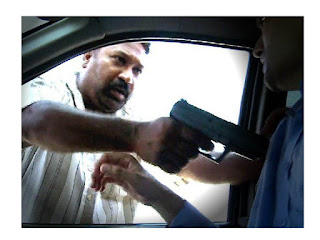
“What the hell are you doing doctor, are you insane?” shouted the consultant at his trainee who was presenting a case, while standing in the resuscitation bay of the Emergency Department (ED), surrounded by nurses, patients and their family members. I was shocked and intimidated while observing this man scold a trainee doctor. He was tall, dressed formally in a red tie and a pristinely white starched lab coat. One look at him and anybody would have quickly noticed that he exuded authority. The poor trainee, visibly shaken, was trying to hold on to the medical files and other instruments from slipping out of his hands. He was also trying dearly to hold on to his wits, I could tell. The ED is a dynamic place that sees several consultants at any one time, called there for expert opinion on patients. But the ones that catch my attention the most tend to be the crankiest and meanest of the lot. How they cope with their lives outside of the hospital mystifies me. Being the ED superv...

Young Minds Push the Frontiers of Neuroscience by Muhammad Altamash (guest writer)

Image
“When the brain’s potential is fully unleashed, there can be few if any limitations. Anyone who tells you otherwise isn’t up-to-date with the latest scientific findings on the brain…for the brain’s potential is the human potential." – Author James Morcan Inspired by the possibilities for progress in neuroscience; young doctors, students and teachers unveiled a range of original thoughts and proposals at the Ignite event, part of the National Health Sciences Research Symposium, Mind and Brain conference. The human brain controls all the body’s thoughts, feelings and actions. It determines what it means to be human and is the source of all our creative and innovative impulses. The central importance of the brain to the body means that the field of neuroscience – the study of the mind, brain and nervous system – holds enormous potential to improve the world around us. With just five minutes each to stir the audience, the seven presenters explored a range of questions inclu...

When Hacking Can Improve Lives (part II) by Muhammad Altamash (guest writer)

Image
Innovative app wins top prize at AKU’s first-ever Hackathon Four innovative solutions in emergency medicine receive awards Innovators at Pakistan’s first-ever medical hackat​hon at the Aga Khan University have proposed new ways of tackling challenges facing Pakistan’s emergency rooms (ER). HistorER , the winning team at the Hackathon, came up with a unique QR (quick response) code system to address a persistent challenge faced by ER doctors. Patients are often brought to emergency by family members or by bystanders who are not aware of their medical history. In the absence of critical information, doctors face delays in performing life-saving procedures.     The HistorER team has suggested that every person carry a medical card with a QR code with vital details: blood group, allergies, current medication and previous operations. Scanned, the QR code would provide doctors immediate access to information and the ability to ini...

Tuttoo

Image
Day 1 of expedition: On which all, except me, start the ascent to Rakaposhi base camp. Photo of Rakaposhi taken from the apple orchard of the Minapin guest house When I woke up the day our expedition was to start, I felt a bit odd. I couldn’t quite pin point the oddity. I ignored the intangible (not quite bordering on distress at that stage), changed into my tracks and went out for a run, as is my norm. I wanted to get my joints freed up enough so the ascent wouldn’t come as too much of a shock. Surprisingly, I couldn’t run much as I lacked energy, so I returned to the guest house where preparation was afoot, somewhat counter-intuitively, for a hearty breakfast for the eager mountaineers. A simple low fat, high starch/protein meal might be the better approach at the beginning of an ascent, but not being a professional trekker who was I to say that aloud. Seeing the parathas , omelets, scrambled eggs and toast did nothing for my appetite. Au contraire, it made...

Death by Chance

Image
What’s the chance of a bad outcome,lik e death, in Karachi? Based on anecdotes circulated on social media and what you read in the news, you might assume that chances for a series of unfortunate events remain high in this city. This prompted a friend to do some calculations to gauge chance of an unexpected death in Karachi, compared to any major metropolitan city in the U.S. Assuming how the percentages were arrived at was fairly accurate, the bottom line, if true, was intriguing: the likelihood of an untimely, unexpected death was similar in the two places. Delving into death rates in Karachi vs. elsewhere was perhaps meant to be an intellectual discourse following the meaningless death of a colleague’s sister in Karachi. Being gunned down outside a famous restaurant after a meal there is hard to rationalize as an expected outcome of a botched cell phone robbery attempt. But this is Karachi. And such occurrences are unfortunately all too frequently heard and shared. Ev...

Of Cigarette Packs and Elephant Dung

Image
Where can you go to see the following? (1) Creative photography on cigarette packs. (2) Innovative co-existence with elephants. Answer: Sri Lanka. Last summer, my family and I went on a week-long sojourn to Sri Lanka. That it happened to coincide with the heat wave in Karachi needs further explanation, in case you think I created a respite for myself primarily because I wanted to get away from angry sun gods. Truth be told, I felt guilty that I was vacationing in a tropical environment while the heat-facilitated death toll rose in Karachi… Anyway, after that trip, there was a strong urge to write about the island. I'm not a travel writer, but after experiencing the ‘wonders of Sri Lanka’, I couldn't stop myself from telling you about that land. Although considered a ‘developing nation’, there were aspects to the country that completely defied that label. As I was visiting from Pakistan, the analogy thus created was insightful. A runner's tale "Are you a...

Narrative Medicine: Stories of Illness and Beyond by Huma Baqir (guest writer)

Image
Narrative medicine (NM), or reflective writing in medicine, recognizes the value of the patient’s story in clinical practice, medical education and research. The idea of combining story-telling with medicine has played a part in medical education for over 40 years, with studies repeatedly showing that a literary flavor of this sort can strengthen and support the compassionate instincts of doctors. Writing about patients and patient encounters, thus, not just creates a unique learning and teaching experience, but also allows for the processing of one’s thoughts, feelings and emotions. This very processing, in turn, allows for empathy and compassion to be bred, acknowledged, nurtured…and then shared in the most fluid of transactions. With this idea in mind came the concept of NM at the Aga Khan University (AKU), with Dr. Asad Mian leading yet another effort under the banner of CriticalCreative Innovative Thinking . The effort soon translated into a workshop on January 20 th , 201...